Heating Element Winding
Request the technical datasheet by email.
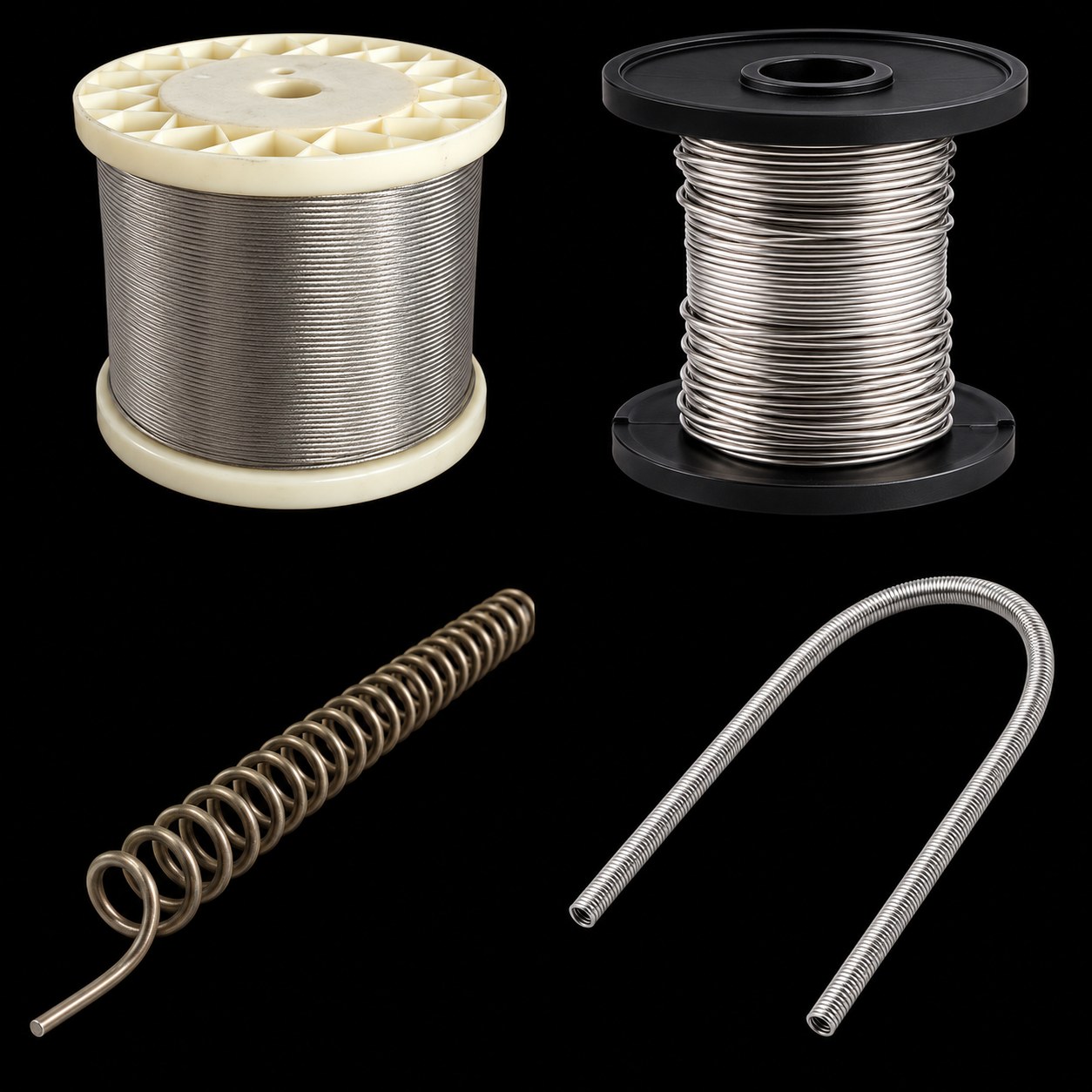
We produce spiral and U windings using European-origin resistance heating wires. We can prepare heating elements to your technical drawings, dimensions and application requirements. Heating element winding requests are assessed by considering target power and voltage, element geometry and operating conditions together. Winding diameter, active length and support arrangement are as important as the wire's electrical properties.
Technical selection and application
In spiral winding, wire diameter, coil diameter, pitch and whether the element is used exposed or supported affect one another. Two elements with the same total resistance may have different surface loadings and wire temperatures. Drawings or samples must be examined together with electrical and thermal requirements.
Spiral and U winding
For spiral winding, wire diameter, coil diameter, winding pitch and active length are clarified from the technical drawing; for U winding, leg lengths, spacing between legs, bend dimensions and terminal connections are clarified. Share target power, voltage and operating temperature to receive a quotation for manufacturing suited to your application.
Surface loading in windings
Wire surface loading is assessed by dividing the power in the active wire by its surface area. How heat is transferred to the surroundings, and whether the element is supported, embedded or freely suspended, affect wire temperature. Therefore, total wattage and resistance alone cannot determine all winding details.
Assessment using samples and drawings
Samples or technical drawings must show coil diameter, winding pitch, active length and terminal connections. If the existing element's failure mode and operating cycle are also shared, material and geometry can be examined together.
Information for quotations and assessment
Power (kW), voltage across the element terminals (V), alloy and wire diameter, coil inside/outside diameter, active length, terminal connections and quantity.